Balancing Care and Accountability: The Debate Over SB 396
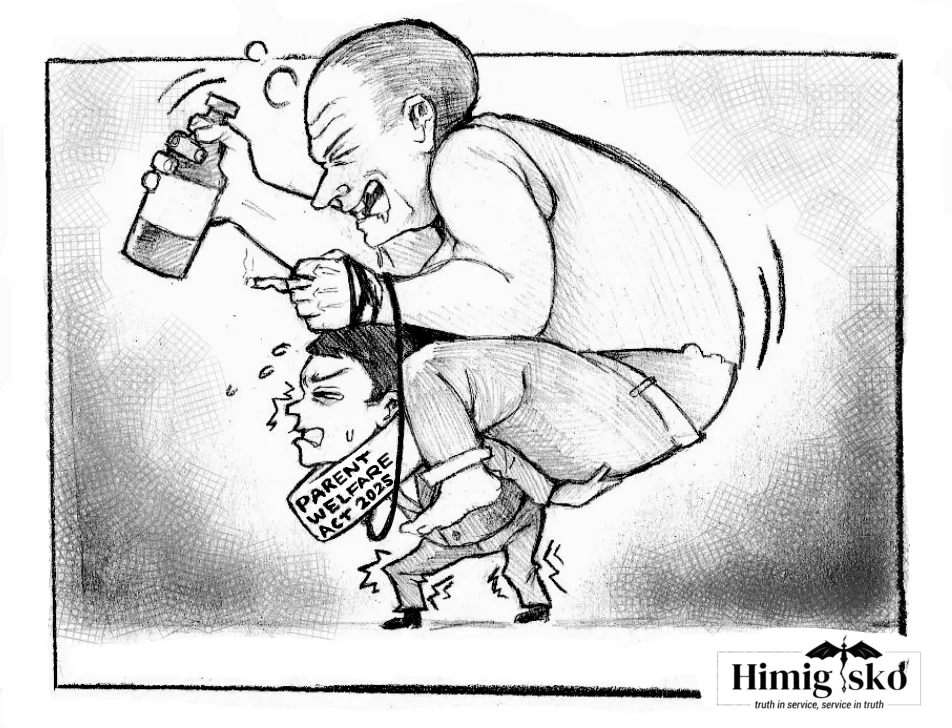
Senator Panfilo "Ping" Lacson's proposed Parents Welfare Act of 2025 has sparked important conversations about familial obligations and state support for the elderly. At its core, the bill aims to uphold the dignity of aging parents, ensuring they are not left neglected in their twilight years. By legally obliging capable children to support their elderly, sickly, or incapacitated parents, the bill recognizes the traditional Filipino value of filial responsibility—something deeply rooted in our culture. Yet, the proposal does not come without nuance, and the public must understand its scope and intent.
A key clarification Lacson made is that the bill explicitly exempts children from supporting parents who have been abusive, neglectful, or who have abandoned them. This is a critical safeguard, one that acknowledges the long-lasting impact of trauma and the need to protect those who were once victims of toxic parenting. Abuse should never be rewarded with mandated care, and this clause respects the emotional realities faced by many adult children. The inclusion of due process—allowing courts to assess such claims—adds a necessary legal filter to ensure fairness. Lacson also stressed that the bill takes into account other protective laws, such as Republic Act 9262, or the Violence Against Women and Children (VAWC) Law, which provides legal protection to children, spouses, and parents from abuse and domestic violence.
Critics have raised concerns that the bill might shift the burden of elder care solely onto children, effectively absolving the state of its responsibilities. However, Lacson was quick to clarify that this is not the case. He emphasized that the proposed measure does not mean the government is passing the responsibility entirely to families. The bill mandates the establishment of "Old Age Homes" in every province and highly urbanized city to accommodate at least 50 elderly parents per facility. These centers aim to serve not only as shelters but also as support hubs for aged care, proving that the state still bears an active role in ensuring the well-being of its elderly citizens.
Another important provision in the bill is its acknowledgment that not all children are financially capable of supporting their parents. In a country where many young adults are already grappling with job insecurity and high living costs, it would be unjust to impose a blanket obligation. The bill, therefore, includes exemptions for those who genuinely lack the means to provide support. It also reinforces an existing legal principle: Article 195 of the Family Code, which explicitly outlines that each family member has a legal obligation to support one another, including children to their parents. Rather than introducing an entirely new obligation, Lacson’s bill seeks to give clearer structure, safeguards, and mechanisms to enforce what is already codified in law.
The Parents Welfare Act of 2025 is more than just a legislative proposal—it is a test of how we, as a nation, define responsibility, justice, and compassion. It dares to ask difficult questions: Do we turn our backs on the elderly who once nurtured us, or do we honor them with dignity and care? Do we blindly impose duty, or do we uphold fairness by protecting those who suffered in silence as children?
For this bill to work, lawmakers must ensure strict implementation of the abuse exemption clause, increase public awareness about legal recourse, and provide sustained funding for quality government-run homes for the aged. Civil society, local governments, and the private sector must also step in—through counseling, elder care programs, and financial aid—to fill the gaps. If we truly want to build a society that respects its elders without retraumatizing the wounded, we must commit to making both the law and its support systems humane, accessible, and enforceable. This is not just about responsibility—it is about restoring balance between accountability and compassion, and acting now before more parents grow old in silence, and more children carry burdens they never deserved.